Prakriti vs Traffic

Jayanagar to Whitefield is 20 km on a map and a lot longer in my morning.

I've lived in Bengaluru all my life and, until recently, I had the luxury of living within 15 minutes of school, college and work.

Now I live in Jayanagar and my office is in Whitefield.

20 km in Bangalore traffic. Torture.

The metro has made things easier. At least I'm not stuck on a road waiting for people to move.

Before I even open my eyes

Before my eyes are fully open, I'm already asking the same questions.

If you've seen a girl running at full speed across platforms and escalators, constantly checking her watch, that's me. If I waste a minute I might miss the train. Or worse, the next one will be so crowded that my only source of oxygen is whatever passes through someone's hair.

That's a lot to get through before my morning coffee, and worse after a tough training session.

So I decided to stop complaining and solve it.
One week, six trips

I started with the simplest data I could collect. Each trip, I screenshotted what Google Maps promised before I left and, when I remembered, ran a stopwatch for what actually happened.

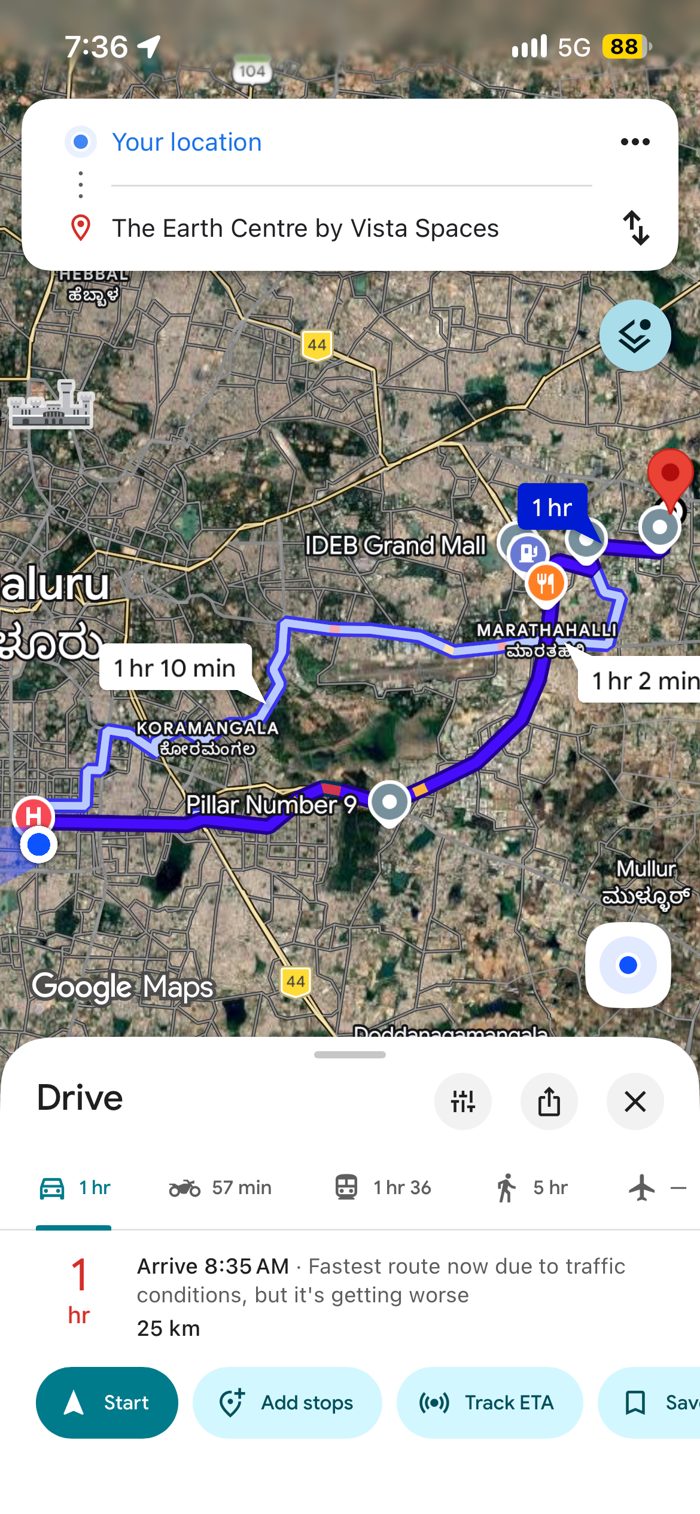
Morning Jayanagar → Whitefield · 7:36 AM

Google Maps driving route, 1 hr, 25 km, arrive 8:35 AM, with a note that traffic is getting worse
Drive: 1 hr, 25 km. “Fastest route now due to traffic, but it’s getting worse.”
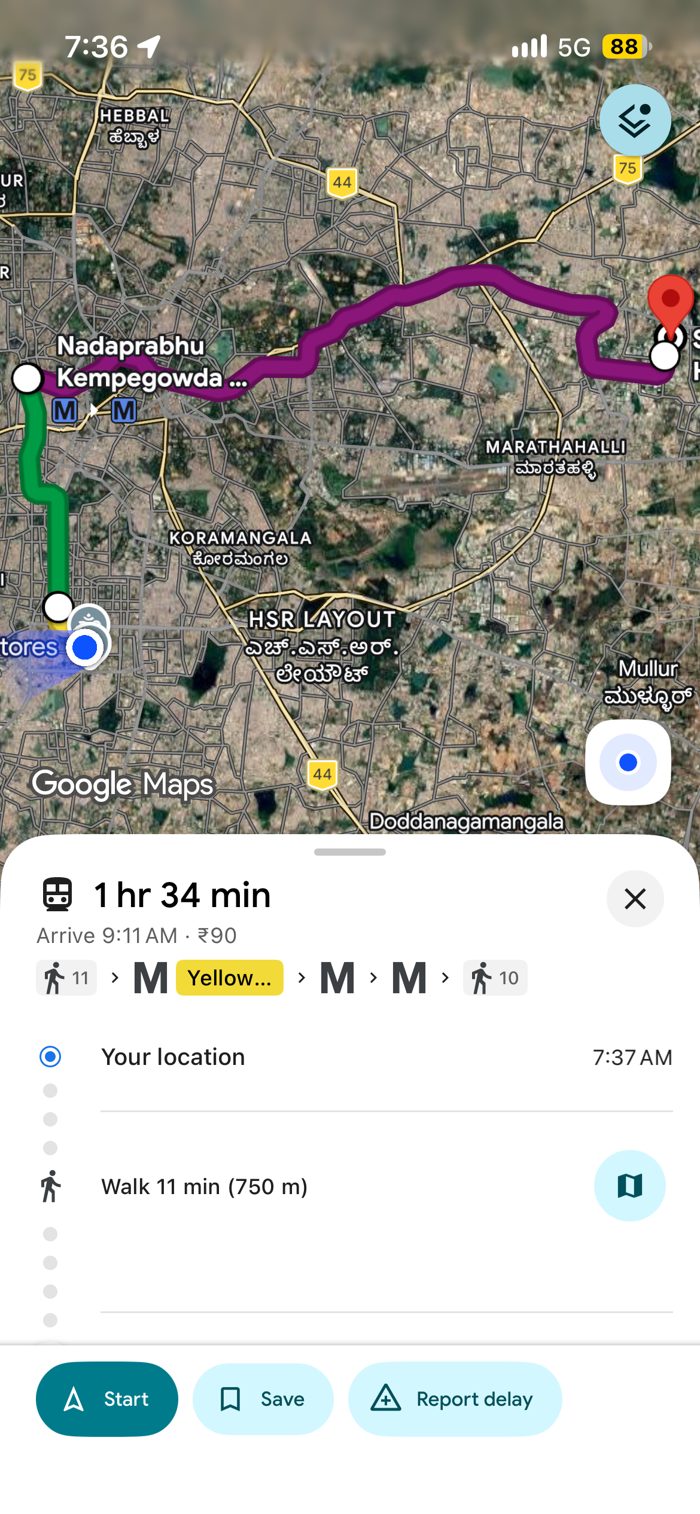
Google Maps public transport route, 1 hr 34 min, Yellow Line, arrive 9:11 AM, 90 rupees
Metro: 1 hr 34, ₹90, arrive 9:11. Walk 11 min, then Yellow Line, then 10 min on foot.
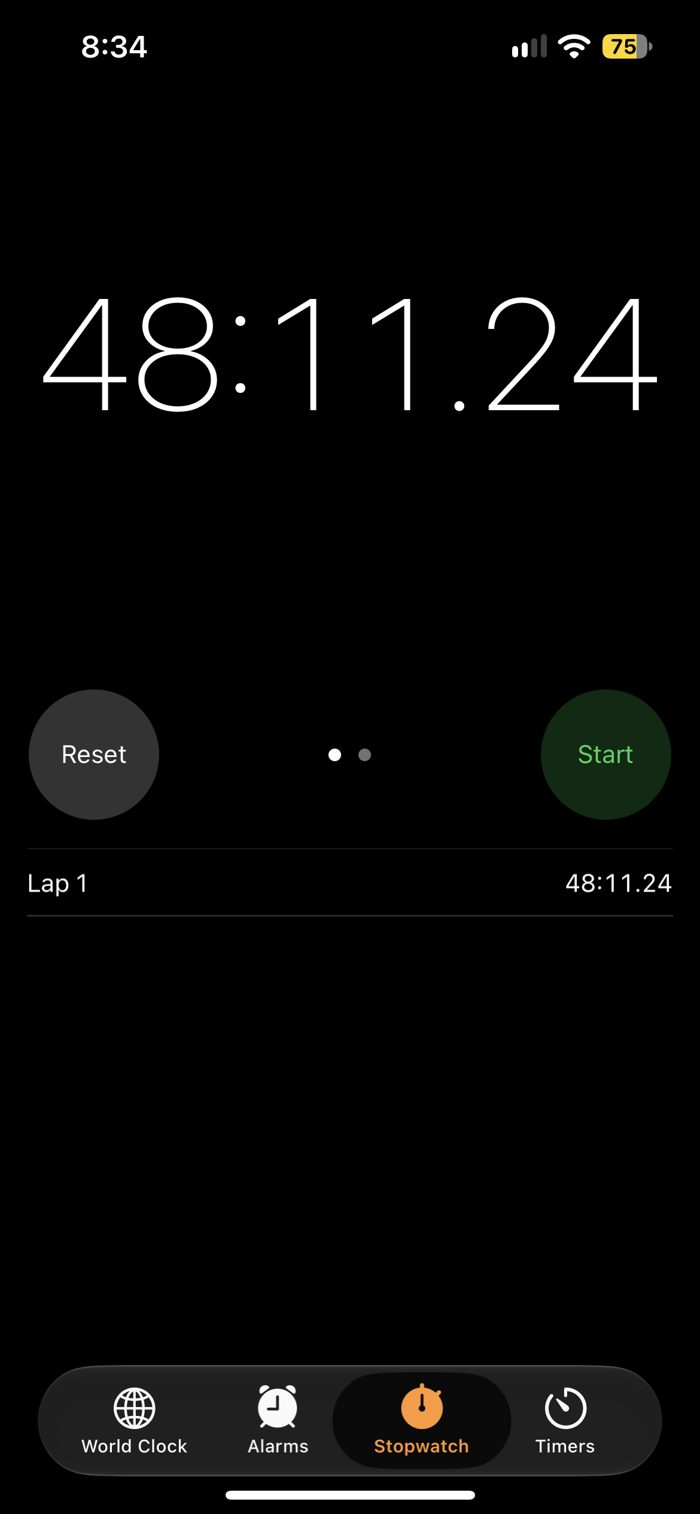
Stopwatch reading 48 minutes 11 seconds at 8:34
Stopwatch at 8:34: 48:11.24. This is the auto.

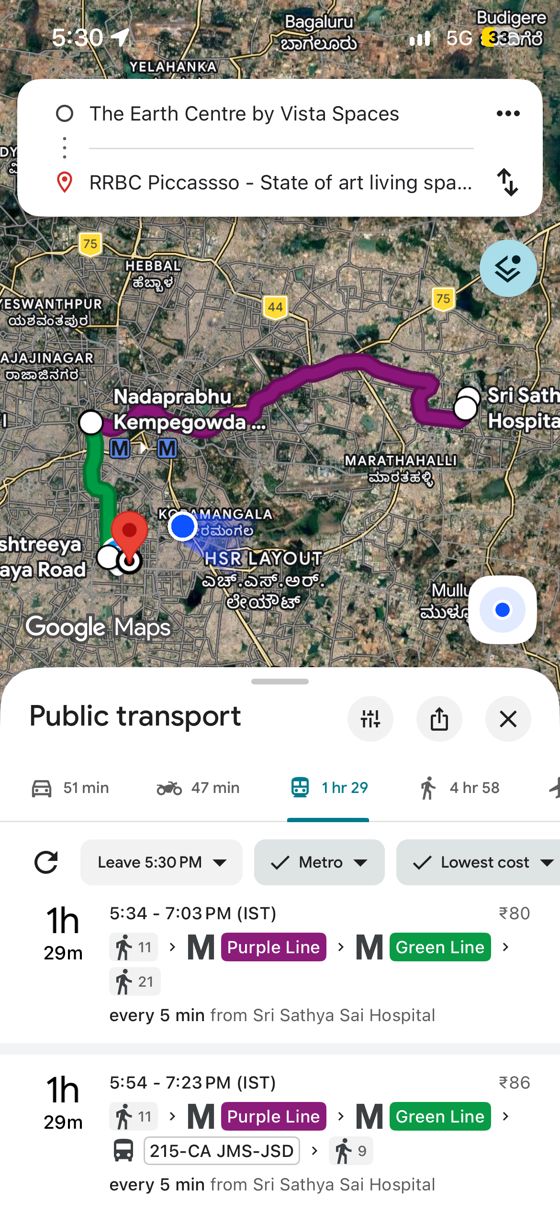
Evening Whitefield → Jayanagar · 5:28 PM

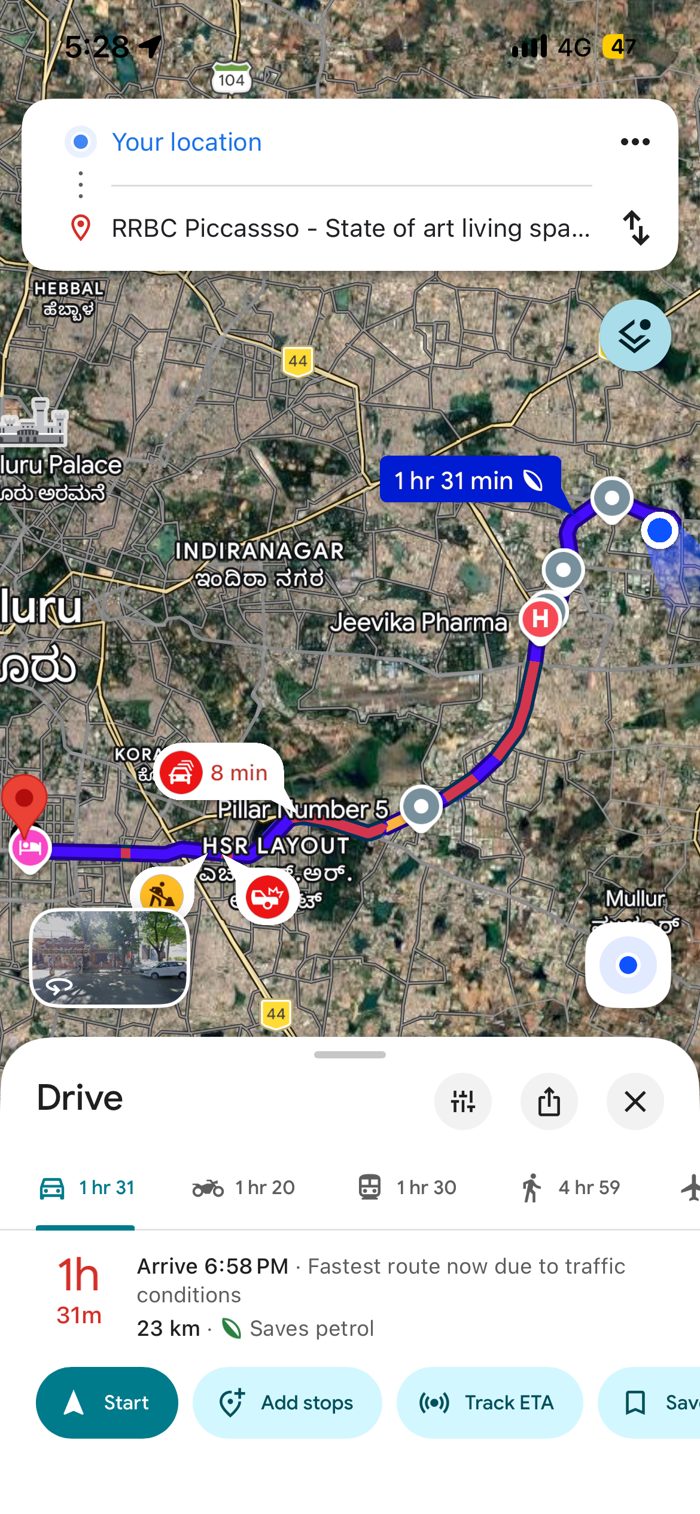
Google Maps driving route, 1 hr 31 min, 23 km, arrive 6:58 PM, with an incident adding 8 minutes
Drive: 1 hr 31, 23 km. An incident near HSR Layout adds 8 min.
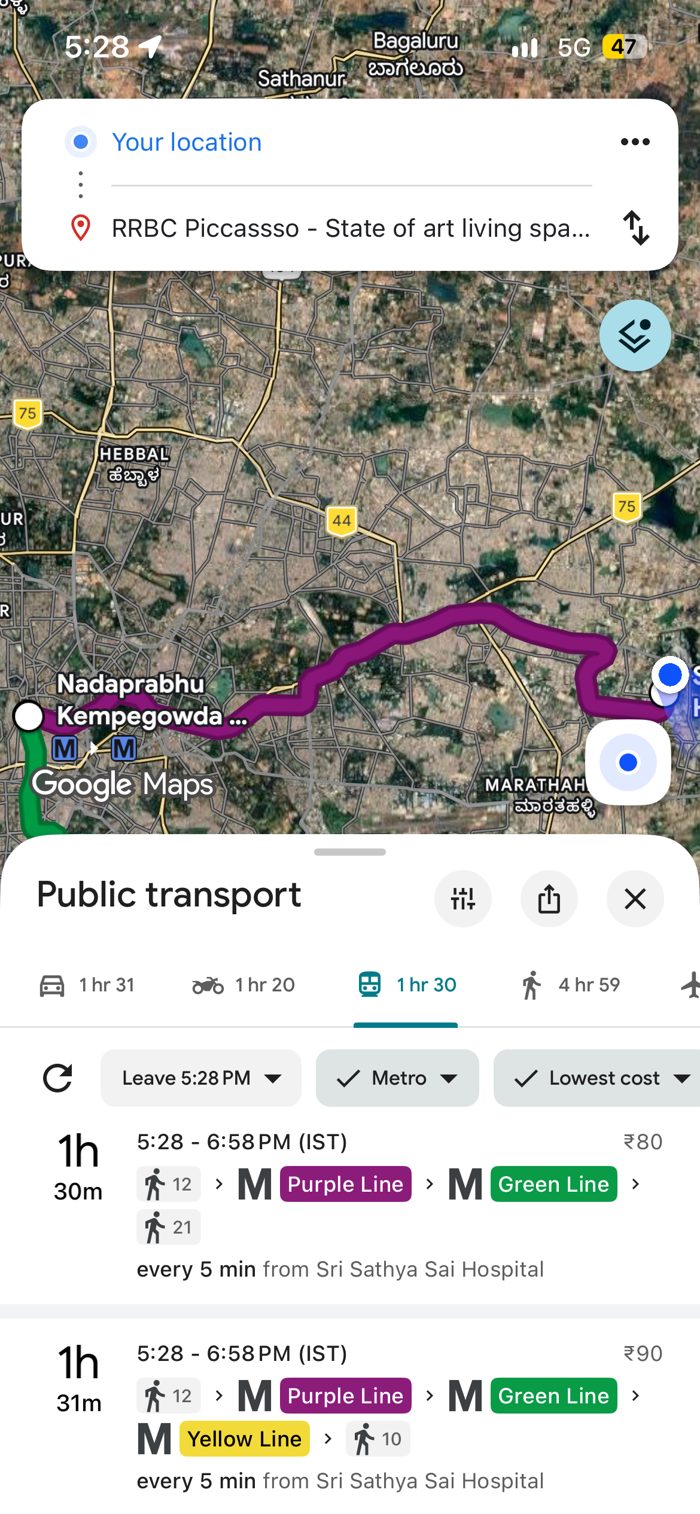
Google Maps public transport options, 1 hr 30 min, Purple Line then Green Line, every 5 minutes
Metro: 1 hr 30, ₹80. Purple Line to Green Line, a train every 5 min.
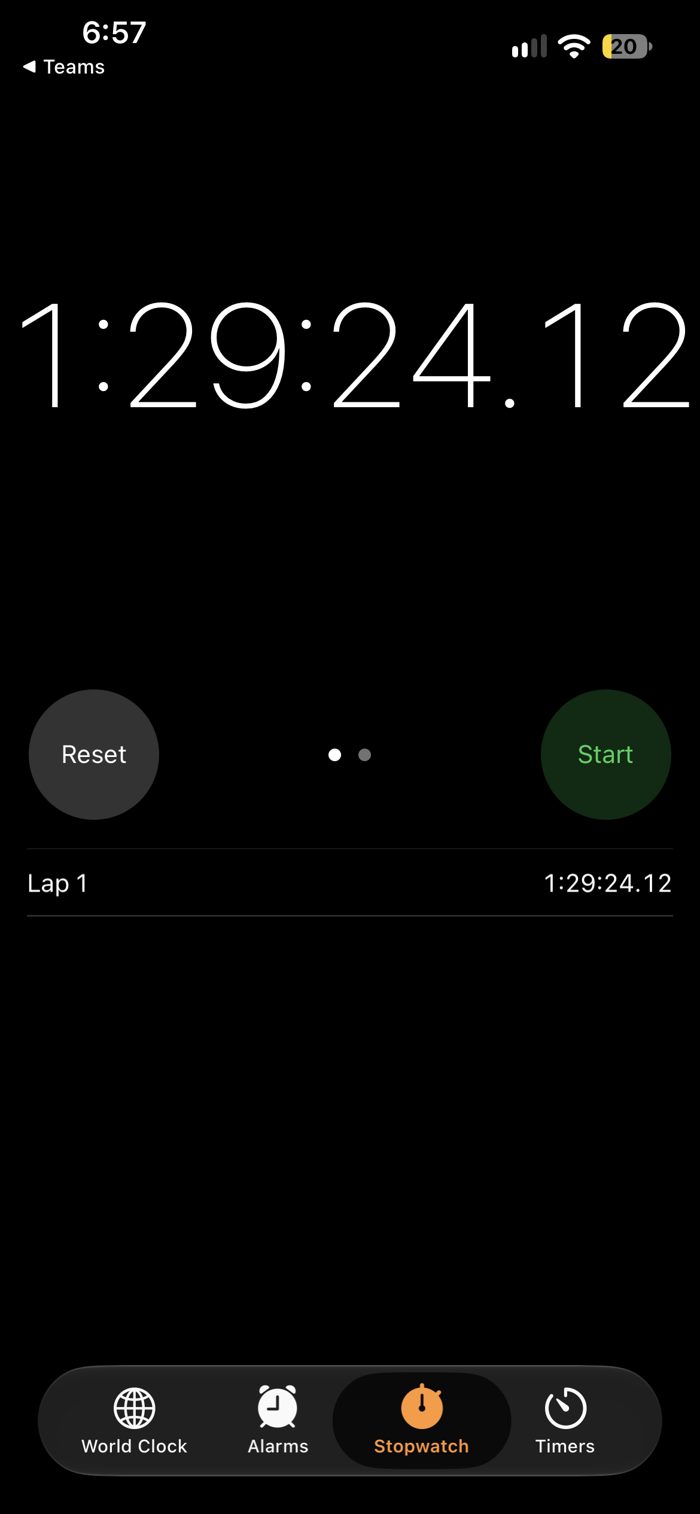
Stopwatch reading 1 hour 29 minutes 24 seconds at 6:57
Stopwatch at 6:57: 1:29:24.12. This is the metro. I did not walk the last stretch home. I took an auto. Walking it would have added about 20 more minutes.

The week at a glance

All six trips side by side. Drive and metro are Google Maps estimates at the time I left.

TripDriveMetroStopwatch
Morning, 7:0853 min1 hr 34–
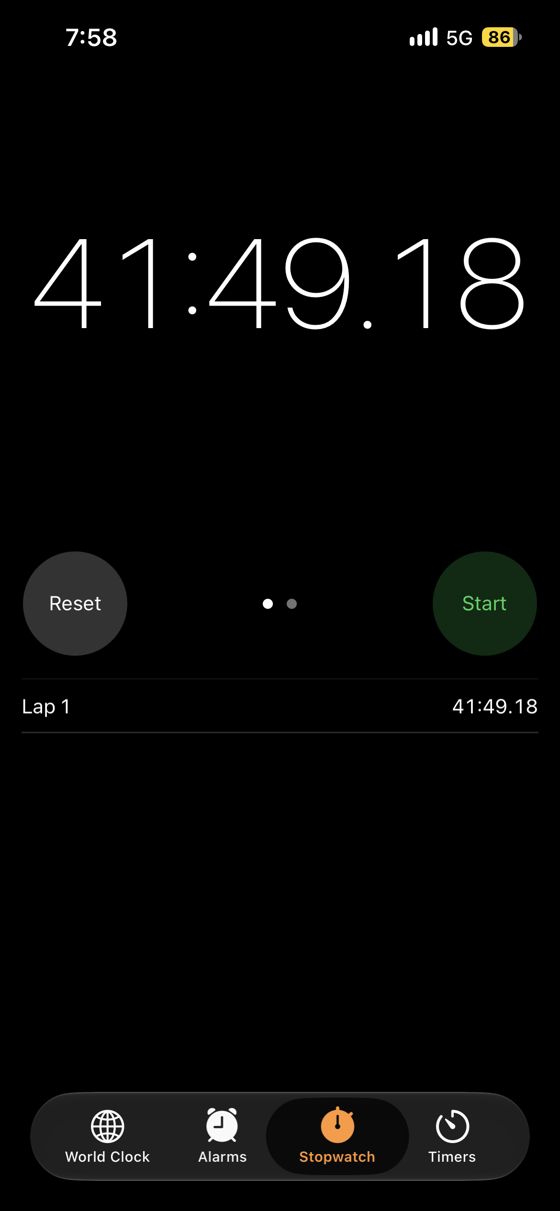
Morning, 7:1547 min1 hr 3441:49
Morning, 7:361 hr1 hr 3448:11
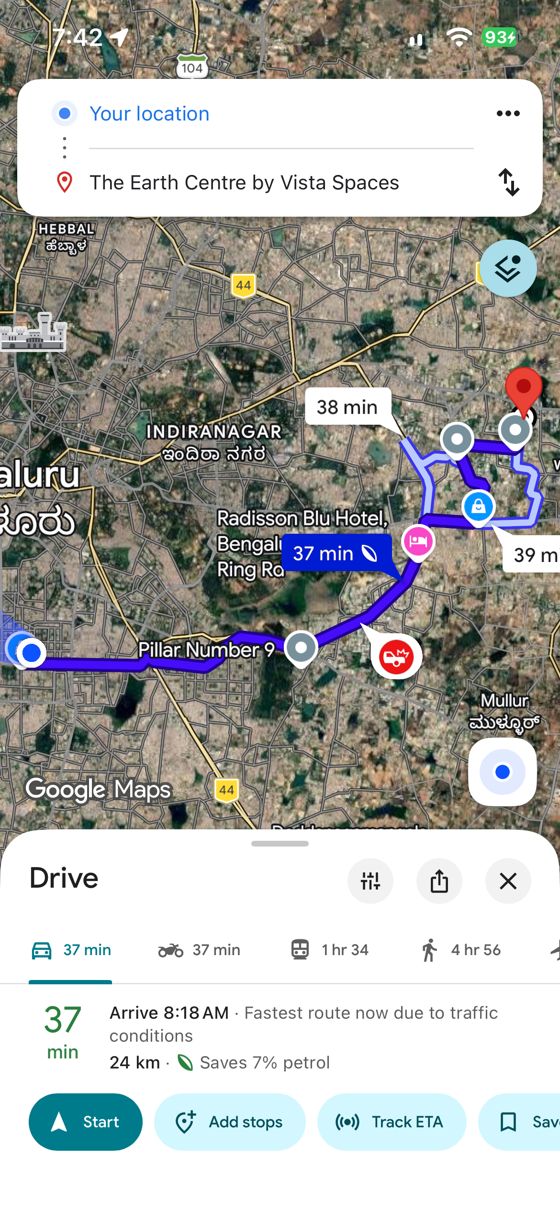
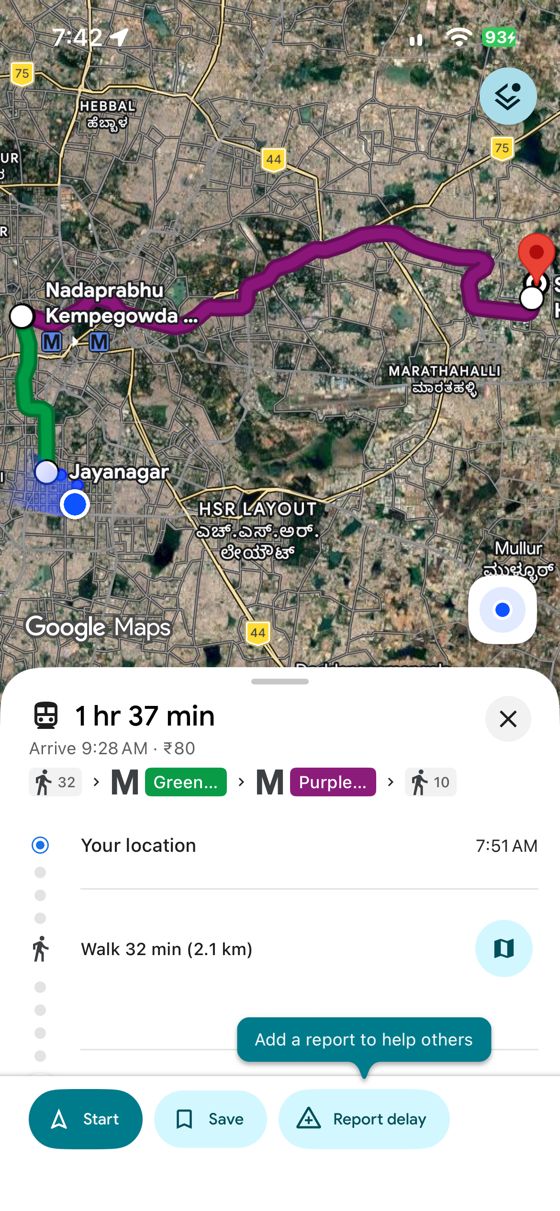
Morning, 7:4237 min1 hr 34–
Evening, 5:281 hr 311 hr 301:29:24
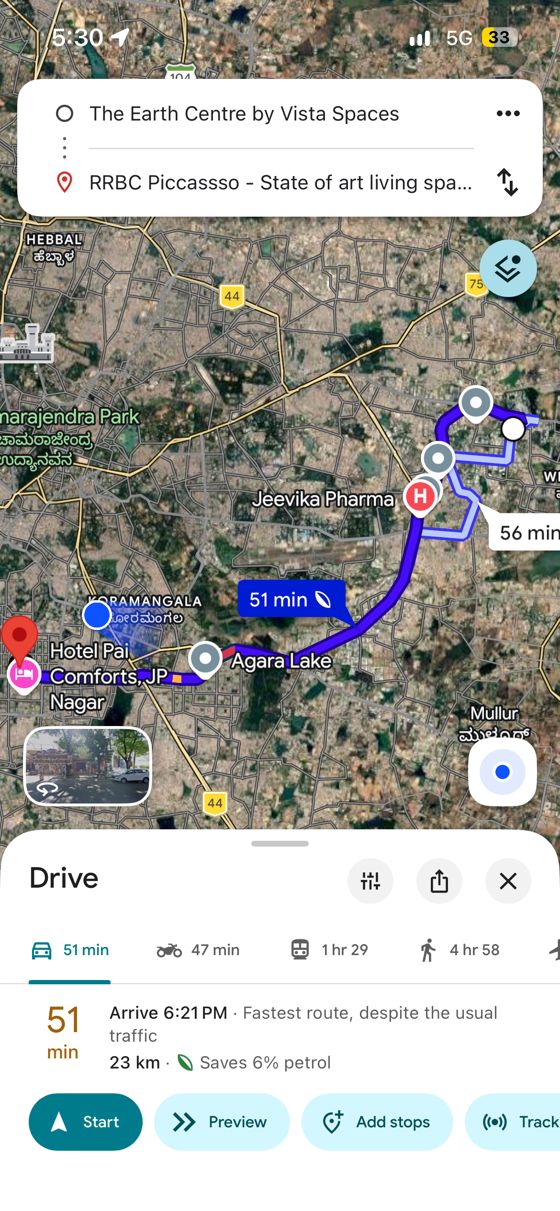
Evening, 5:3051 min1 hr 29–

Stopwatch times are for the trips I remembered to time. The 48:11 is an auto. The 1:29:24 is the metro, with an auto for the last stretch home instead of a walk that would have added about 20 minutes.

See the other 8 screenshots
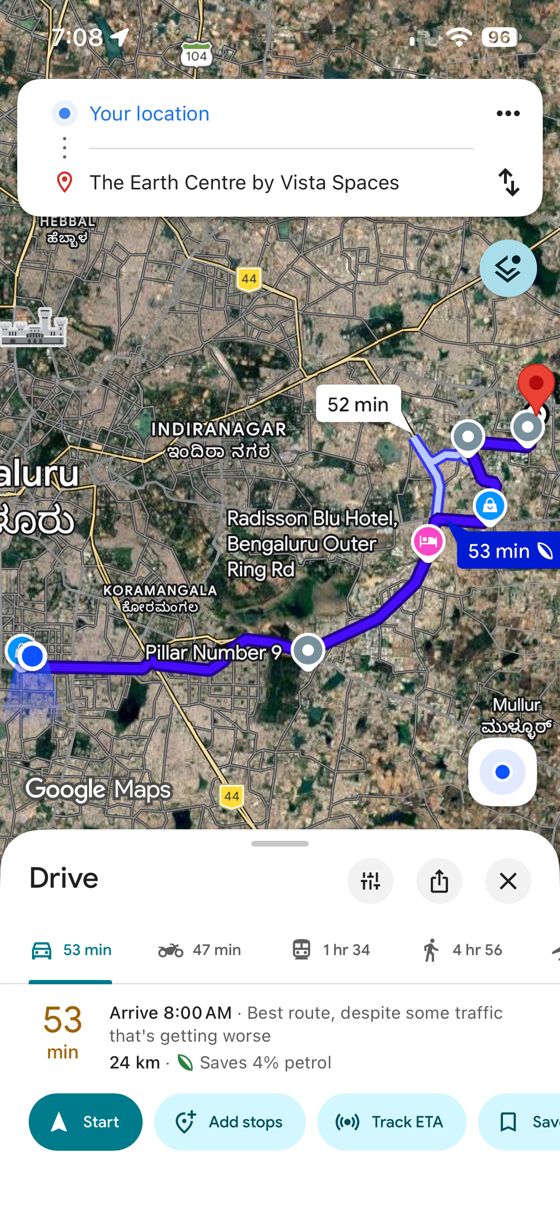
Google Maps drive route at 7:08 AM, 53 minutes
7:08 AM · Drive 53 min, 24 km
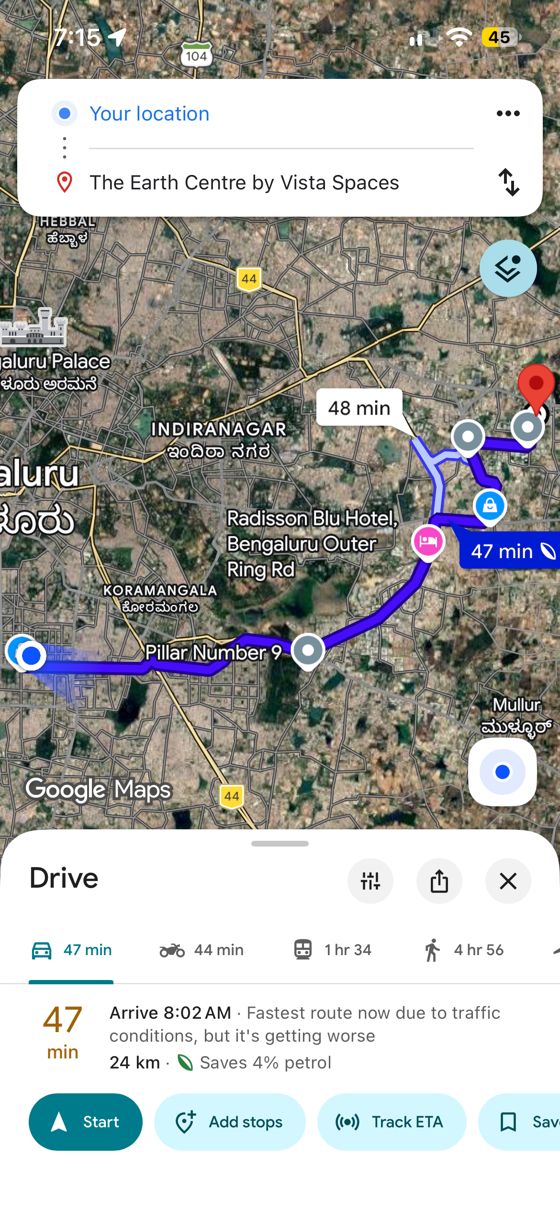
Google Maps drive route at 7:15 AM, 47 minutes
7:15 AM · Drive 47 min, 24 km
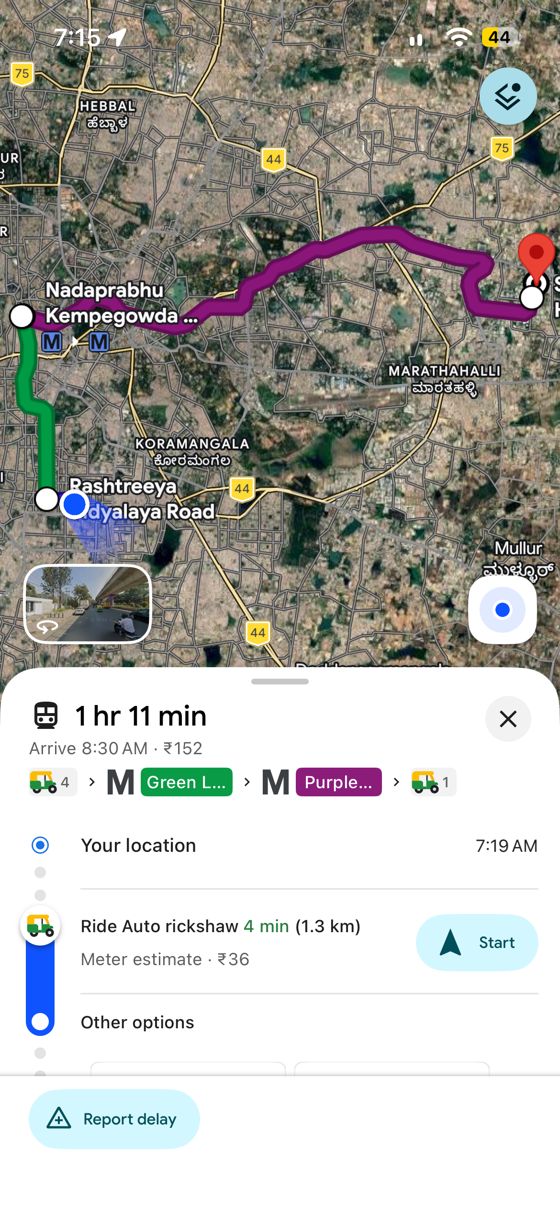
Google Maps auto plus metro route at 7:15 AM, 1 hr 11
7:15 AM · Auto + metro 1 hr 11, ₹152
Stopwatch reading 41 minutes 49 seconds at 7:58
Stopwatch at 7:58 · 41:49.18
Google Maps drive route at 7:42 AM, 37 minutes
7:42 AM · Drive 37 min, 24 km
Google Maps metro route at 7:42 AM, 1 hr 37
7:42 AM · Metro 1 hr 37, ₹80, starts with a 32 min walk
Google Maps drive route at 5:30 PM, 51 minutes
5:30 PM · Drive 51 min, 23 km
Google Maps metro options at 5:30 PM, 1 hr 29
5:30 PM · Metro 1 hr 29, ₹80, every 5 min

Two things jumped out. The metro barely moved: 1 hr 29 to 1 hr 34 on all six trips. The drive never sat still. The same morning trip was quoted anywhere from 37 minutes to a full hour, depending on when I left. A slow but predictable option against a faster but unpredictable one is exactly what I want to untangle.

What I'm building

Google gives me one number per mode, and at this point I don't fully trust either of them. So here's the experiment: for one week, I'm going to poke at the Google Maps API and BMRCL's GTFS data and see what comes out. Not a finished tool, just a few questions I'm curious about.

I have no idea yet if any of this will actually work. I'll write down the rabbit holes as I go.

Part 2 →